Move Without Pain
Clinician, athlete, and medical rehabilitation professional who loves to talk about health & wellness.
Aug 29 • 1 min read
ACL Myth: Does Every ACL Tear Really Need Surgery?
|
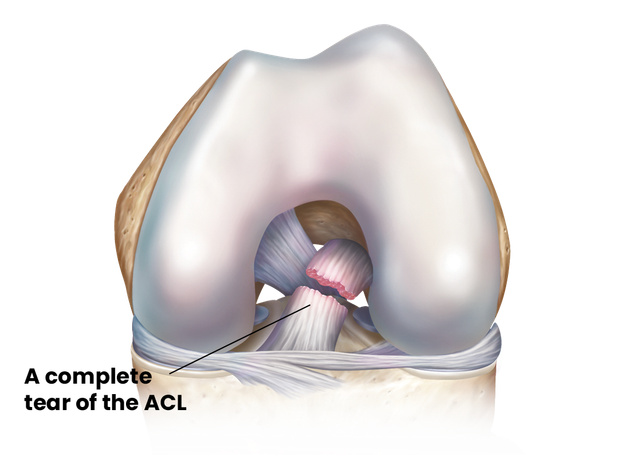
Hello Reader, There’s a heavy weight that drops on someone the second they see these words on an MRI report: complete ACL tear. Right away, the immediate assumption(from doctors, coaches, and society at large) is that the operating table is the only way forward. But in our clinic, we’ve learned it’s worth taking a step back. Not everyone needs surgery. There is a fascinating subset of patients we call "copers"... individuals who manage to achieve really good functional outcomes without ever going under the knife. As clinicians, our job is to look past the panic and use specific frameworks to figure out who might actually be able to skip the procedure. While non-copers live with the feeling of the knee "giving away" during everyday movements, true copers somehow maintain dynamic joint stability, even with a completely torn ligament on MRI. Of course, stability is just one piece of a much larger puzzle, but it's an important realization when you're sitting around trying to figure out your next move... should I get surgery or not?
The real headache with all of this, based on the available evidence we have right now, is the timeline. Ideally, we’d love to observe someone's knee for a full year post-injury to see how it naturally adapts. But let's be honest... when you have an active lifestyle, sports, or career goals on the line, waiting 12 months just to see "what happens" isn't a realistic option for most people. That being said, we put patients on a dedicated, long-term rehabilitation path and run them through rigorous functional and dynamic performance testing around the 5 to 6-month mark. We use it as a quantitative checkpoint. If a patient clears our strict criteria, we can have a conversation of non-operative management and keep pushing their training forward. If they don't, we have our answer... they will likely need surgery. We always want to be transparent: choosing the non-surgical route is still an emerging field, and surgical reconstruction remains the established gold standard for a reason. But a growing body of evidence shows that carefully selected individuals can maintain a high-octane, active lifestyle and exceptional joint function without a reconstructed ligament. Even if you give conservative rehab everything you've got and ultimately decide you do need surgery, you aren't starting from scratch. You're walking into the operating room stronger, leaner, and better prepared than ever... and that is never a bad thing. |
Clinician, athlete, and medical rehabilitation professional who loves to talk about health & wellness.